Austria's Village Market Cycles and How They Align With Regional Residency Timelines for New Arrivals
Geschrieben von Ulrich Schmidt · 20.8.2026
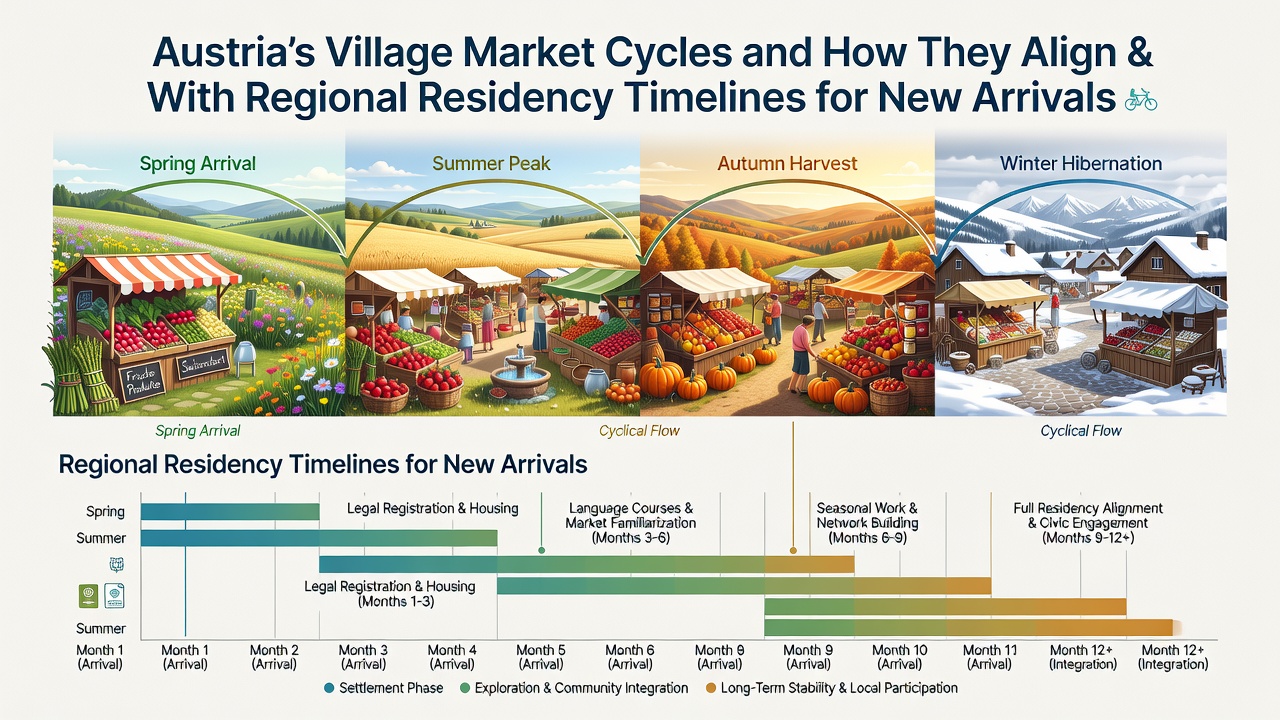
Austria's Village Market Cycles and How They Align With Regional Residency Timelines for New Arrivals
Seasonal Rhythms in Austrian Villages
Austria maintains a network of village markets that operate on predictable seasonal cycles across regions such as Tyrol, Styria, and Lower Austria, where weekly farmers' markets run alongside larger events tied to harvests, festivals, and holidays. These cycles include spring asparagus markets in March through May, summer produce stalls peaking in July and August, autumn wine and harvest fairs from September to October, and winter Christmas markets that begin in late November. Data from Statistik Austria indicates that more than 1,200 such markets occur annually in rural municipalities, with attendance figures rising 15 to 20 percent during peak months according to regional tourism reports.
New arrivals seeking residency must navigate administrative processes that often intersect with these market schedules because local municipal offices adjust operating hours and appointment availability around community events. In many districts, residency registration through the Meldepflicht system and subsequent permit applications require in-person visits, and clerks frequently schedule these around market days when staff participation in local stalls reduces office capacity.
Residency Timelines and Provincial Variations
Non-EU nationals typically complete an initial three-month visa period before applying for a residence permit, with processing times averaging four to eight weeks depending on the province and workload. The Austrian Federal Ministry of the Interior publishes guidelines showing that applicants in western provinces like Vorarlberg experience shorter queues during summer market lulls, whereas eastern regions near Vienna see extended waits when autumn fairs coincide with increased seasonal labor registrations. Observers note that new arrivals often align their arrival dates with quieter market periods to secure earlier appointments for biometric data collection and document verification.
Market Cycles Influencing Administrative Workflows
Regional residency offices in places like Salzburg and Carinthia coordinate their calendars with market organizers because many civil servants hold dual roles in both administration and local vendor associations. This overlap means that during high-intensity market weeks, such as those surrounding the August harvest festivals, processing of residency extensions can stretch by an additional two weeks. Figures from provincial government portals reveal that in 2025, applications submitted in early August faced average delays of 12 days compared to those filed in mid-September after major events concluded. New arrivals who register for temporary work permits in market-related sectors, including food vending or craft sales, sometimes receive expedited reviews because these positions support local economies during peak seasons.
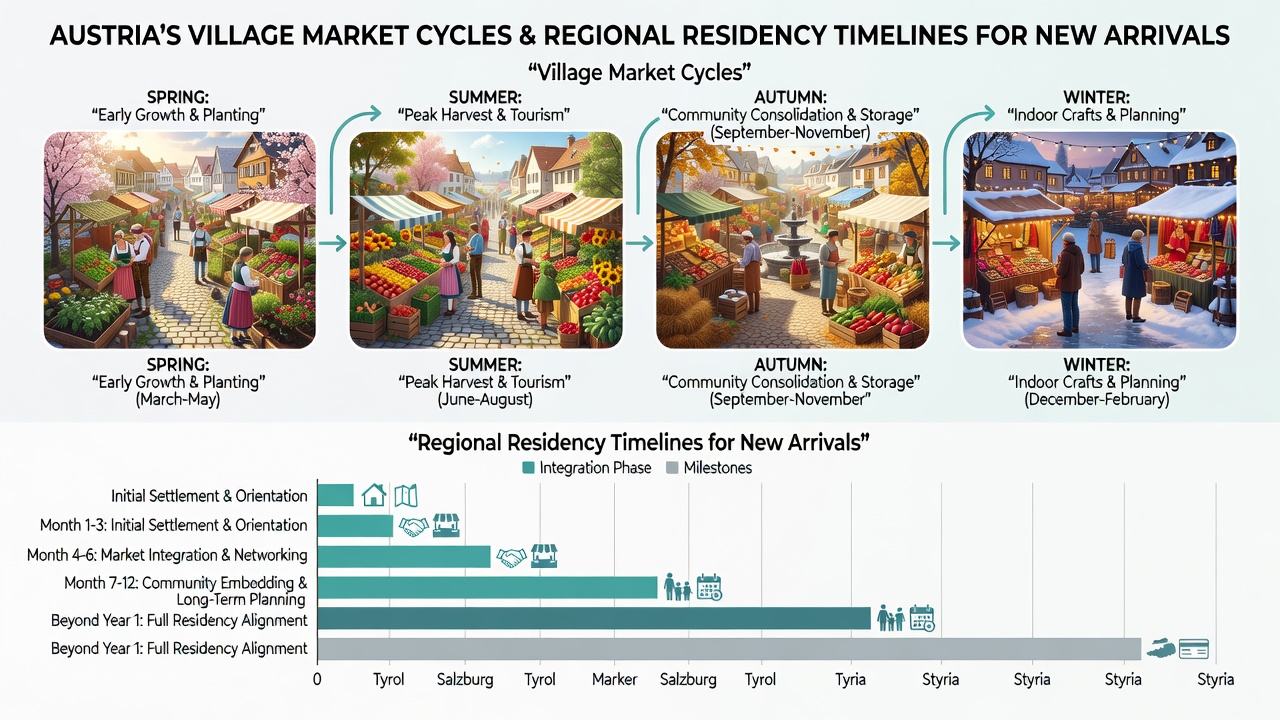
August 2026 Projections and Regional Patterns
August 2026 falls within the traditional summer market surge, when villages host produce festivals and open-air events that draw both residents and temporary workers. Provincial authorities in Upper Austria have already published preliminary calendars indicating reduced residency counter hours from August 10 through 24 to accommodate staff involvement in these gatherings. New arrivals planning submissions around this window benefit from submitting complete documentation packages in July, as data from the European Migration Network shows that complete files move through review 30 percent faster before seasonal peaks begin. In contrast, applicants arriving after August 20 often encounter backlogs that extend into September when schools reopen and additional administrative demands arise.
Those settling in market-heavy districts such as the Wachau Valley or the Salzkammergut area frequently time their integration courses to coincide with off-peak market weeks, allowing focus on language requirements without competing for limited municipal resources. Researchers at the University of Innsbruck have documented that residency approval rates remain consistent year-round, yet the actual timeline from application to issuance varies by up to three weeks based on alignment with local event schedules.
Practical Alignment Strategies Observed Across Regions
People moving to Austria from outside the EU commonly consult municipal websites for combined market and office calendars before finalizing travel dates. In Styria, for example, authorities release joint schedules each spring that list both farmers' market dates and residency service windows, enabling applicants to avoid conflicts. Similar resources appear in Burgenland and Lower Austria, where digital portals highlight periods when extended market setups occupy town squares and limit parking for administrative visits. New arrivals who secure housing near regional centers gain flexibility because larger towns maintain steadier office hours even during market seasons, whereas smaller villages may close counters entirely on event days.
Employment tied to markets provides another connection point because seasonal vendor roles can satisfy proof of sufficient resources required for certain residence permits. Statistics from the Austrian Economic Chamber indicate that approximately 8 percent of temporary work authorizations in rural areas link directly to market operations between May and October, offering a pathway that synchronizes economic activity with residency milestones.
Conclusion
Austria's village market cycles operate on established seasonal patterns that intersect with residency procedures in measurable ways across different provinces. New arrivals who review published calendars from municipal offices and provincial authorities can coordinate their application timelines accordingly, particularly around periods such as August 2026 when summer events intensify. Official sources including the Austrian Federal Ministry of the Interior and regional statistical reports supply the data needed to anticipate these alignments without disruption to standard processing requirements.