Austria's Thermal Spa Access Rules Coordinate with Health Insurance Enrollment Periods for International Retirees in Spa Towns
Geschrieben von Katja Günther · 18.10.2026

Austria's Thermal Spa Access Rules Coordinate with Health Insurance Enrollment Periods for International Retirees in Spa Towns
Austria maintains a network of thermal spas across regions such as Styria, Salzburg, and Lower Austria where therapeutic access often ties directly to public health insurance coverage through providers like the Austrian Health Insurance Fund known as ÖGK. International retirees settling in towns including Bad Ischl, Bad Gastein, and Baden bei Wien must align their enrollment in these systems with specific administrative windows to qualify for subsidized treatments that include mineral baths, physiotherapy sessions, and rehabilitation programs.
Core Regulations Governing Spa Access
Thermal spa facilities operate under guidelines from the Austrian Federal Ministry of Social Affairs that require documented medical referrals combined with active insurance status before granting reduced-rate entry. Data from national health records shows that coverage applies only after confirmation of enrollment status which retirees obtain through registration at local district offices. Those who complete the process gain access to packages that cover up to 80 percent of standard fees for prescribed courses lasting between one and three weeks.
Rules specify that spas in designated health resort zones maintain separate billing streams for insured versus private visitors and facilities track enrollment dates closely to prevent gaps in eligibility. International arrivals from non-EU countries face additional verification steps that include proof of long-term residency permits alongside insurance documents.
Insurance Enrollment Mechanics for Retirees
International retirees qualify for voluntary membership in Austria's statutory health insurance after establishing primary residence and securing a settlement permit under the Red-White-Red Card system or equivalent pathways. Enrollment periods run on quarterly cycles with deadlines falling at the end of March, June, September, and December yet late submissions can trigger retroactive coverage starting from the application month. Officials process applications through regional offices where staff verify income sources, pension transfers, and prior insurance history from home countries.
Researchers tracking expat settlement patterns note that timing these steps with spa town moves reduces delays in accessing therapeutic services. Once enrolled, beneficiaries receive an e-card that spas scan to confirm eligibility before scheduling treatments.
Alignment Between Enrollment Cycles and Spa Utilization
Many retirees coordinate arrivals to coincide with enrollment deadlines so they can begin spa programs without interruption. For instance, those targeting October starts often submit paperwork in September to activate coverage by early November when cooler weather increases demand for indoor thermal facilities. This synchronization appears in administrative data from spa operators who report higher insured visitor volumes immediately following quarterly enrollment closures.
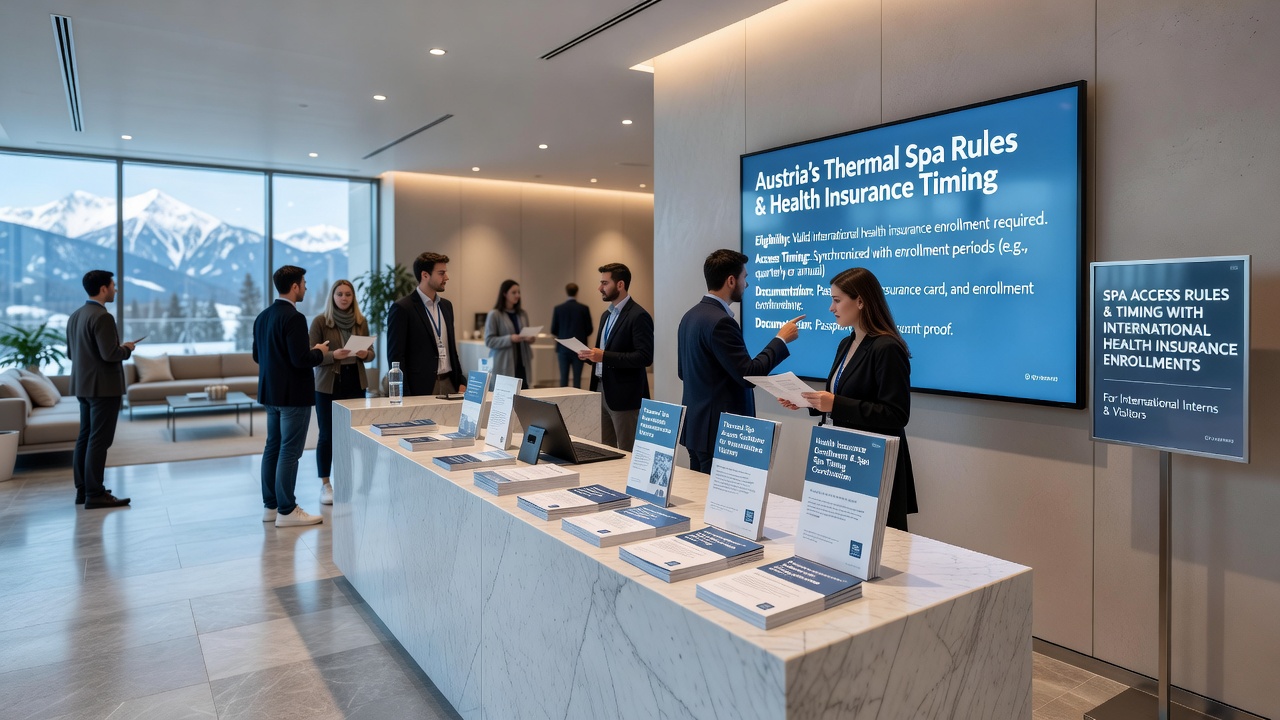
Observers note that towns like Bad Hofgastein adjust their treatment calendars around these patterns to accommodate new arrivals whose insurance activates mid-quarter. Facilities maintain waiting lists that prioritize recently enrolled individuals for slots in arthritis management or post-operative recovery programs. Those who miss a cycle may wait several months before full benefits apply unless they opt for private bridging coverage.
Practical Considerations in Spa Town Settlements
Local municipalities in thermal regions provide orientation sessions that explain how insurance enrollment unlocks municipal subsidies for spa visits. International retirees often settle near facilities such as the Römertherme in Baden or the Alpentherme in Gastein where proximity simplifies repeated access during prescribed treatment blocks. Records indicate that synchronized timing helps avoid out-of-pocket costs that can reach several hundred euros per week for uninsured users.
Figures from the Austrian social security system reveal steady growth in non-EU retiree enrollments over the past five years with many choosing spa districts for their integrated health infrastructure. Enrollment requires submission of translated pension statements and medical histories which district offices forward to the central fund for final approval.
Developments Expected in October 2026
Policy updates scheduled for October 2026 will introduce digital verification tools that link e-card status directly to spa booking platforms reducing paperwork for new enrollees. The changes follow pilot programs in select provinces and aim to shorten processing times from six weeks to under three. Retirees planning moves around that period can use the new system to confirm coverage before finalizing spa reservations.
Additional adjustments will expand eligibility for certain chronic condition treatments at spas while maintaining the same quarterly enrollment structure. Government communications detail these modifications through regional health portals to assist arriving internationals with planning.
Conclusion
Austria's framework connects thermal spa access to health insurance enrollment through defined administrative cycles that international retirees must navigate when choosing spa towns as residences. Coordination of settlement dates with quarterly deadlines supports uninterrupted use of covered services while upcoming digital enhancements in 2026 promise further streamlining. Data from health authorities and facility operators continues to guide these alignments for new arrivals seeking therapeutic benefits in regions such as Salzburg and Styria.