Austria's Postal Delivery Schedules and Their Effects on Remote Work Setup for New Arrivals in Countryside Areas
Geschrieben von Alex Krause · 4.10.2026
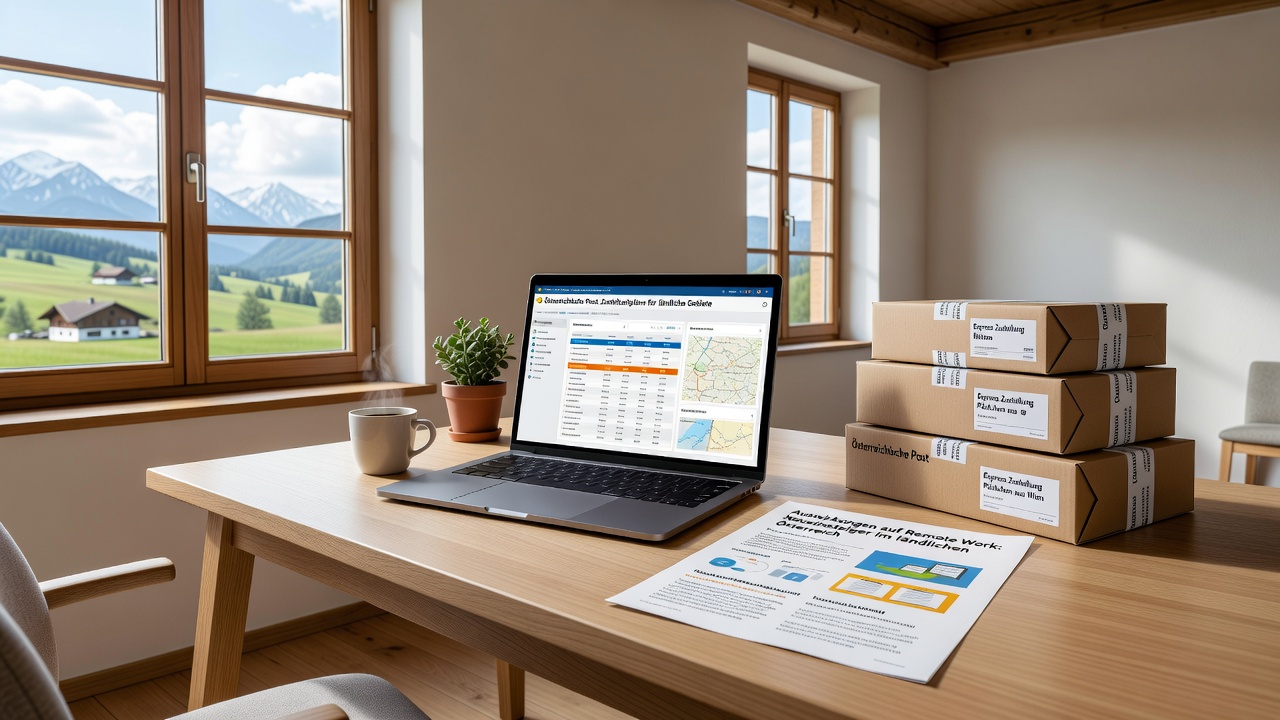
Austria's Postal Delivery Schedules and Their Effects on Remote Work Setup for New Arrivals in Countryside Areas
Austria's postal network operates under the oversight of Österreichische Post AG and maintains structured delivery windows that vary significantly between urban centers and remote countryside districts where new arrivals often establish home offices. Those who've studied rural logistics note that standard delivery occurs between 7 a.m. and 5 p.m. on weekdays with limited Saturday service in many alpine and lowland villages while Sunday remains unavailable except during peak holiday periods. Researchers from the European Commission have documented how these fixed windows intersect with the needs of remote professionals who rely on timely receipt of hardware such as monitors routers and ergonomic equipment shipped from international suppliers.
Delivery Patterns Across Countryside Regions
Observers note that rural routes in provinces like Tyrol Vorarlberg and parts of Styria receive mail and parcels on a once-daily basis whereas certain high-altitude hamlets see service reduced to three or four days each week during winter months. Data from Statistics Austria indicates average delivery times for standard letters remain under 24 hours nationwide yet parcels exceeding 2 kilograms often require an additional day when addressed to addresses beyond the reach of main arterial roads. New residents coordinating remote work setups frequently encounter these timelines when ordering specialized items that support stable internet connections or ergonomic workstations essential for sustained productivity.
Intersection With Remote Work Requirements
Remote workers settling in countryside areas depend on consistent parcel flow for items that include VPN hardware backup drives and office furniture components shipped internationally. Experts at the Austrian Federal Ministry for Climate Action Environment Energy Mobility Innovation and Technology have tracked how delivery cutoffs at 5 p.m. create narrow windows for signature-required packages that many carriers enforce strictly. When a router arrives after the daily rural route concludes the device may wait until the following morning or even later in areas with reduced frequency thereby delaying network configuration that underpins daily video calls and file transfers.
Challenges for New Arrivals Establishing Home Offices
Individuals relocating from abroad often schedule their arrival around residency appointments and must simultaneously arrange for delivery of work essentials that cannot be sourced locally in smaller villages. According to figures compiled by the OECD on digital infrastructure in rural Europe many countryside districts in Austria still experience variable broadband installation times which compounds the effect of postal schedules when replacement parts become necessary. One documented case involved a software developer who waited three days for a replacement power supply unit because the initial parcel reached the village post office after the final delivery run of the week had already departed.

Seasonal Variations and Planned Adjustments
October typically brings stable weather conditions that support regular delivery routes yet authorities have announced that certain adjustments will take effect in October 2026 when Österreichische Post implements updated routing software across select alpine districts to account for increased tourism traffic. These modifications aim to maintain existing service levels while accommodating higher parcel volumes without extending operating hours. Research published by the University of Melbourne on comparative rural postal systems highlights how similar scheduling constraints in other mountainous regions create predictable bottlenecks that remote professionals learn to anticipate through advance ordering and local pickup arrangements.
Adaptation Strategies Observed in Practice
Those who've examined settlement patterns report that new arrivals frequently combine postal services with local collection points at municipal offices or partner retailers to bypass single daily drop-offs. Canadian studies on northern logistics demonstrate comparable approaches where residents coordinate bulk deliveries to central hubs before final distribution which reduces the impact of fixed rural timetables. In Austria this practice allows remote workers to receive multiple items in one trip rather than waiting across several days for individual parcels to arrive at their doorstep.
Conclusion
Austria's postal delivery framework continues to shape the practical realities of remote work for newcomers in countryside settings through its predictable yet regionally variable schedules. Data from multiple sources illustrates the direct connection between delivery windows and the speed at which home offices become operational. As October 2026 approaches the planned routing updates offer one example of ongoing efforts to balance service consistency with changing demands across rural Austria.